



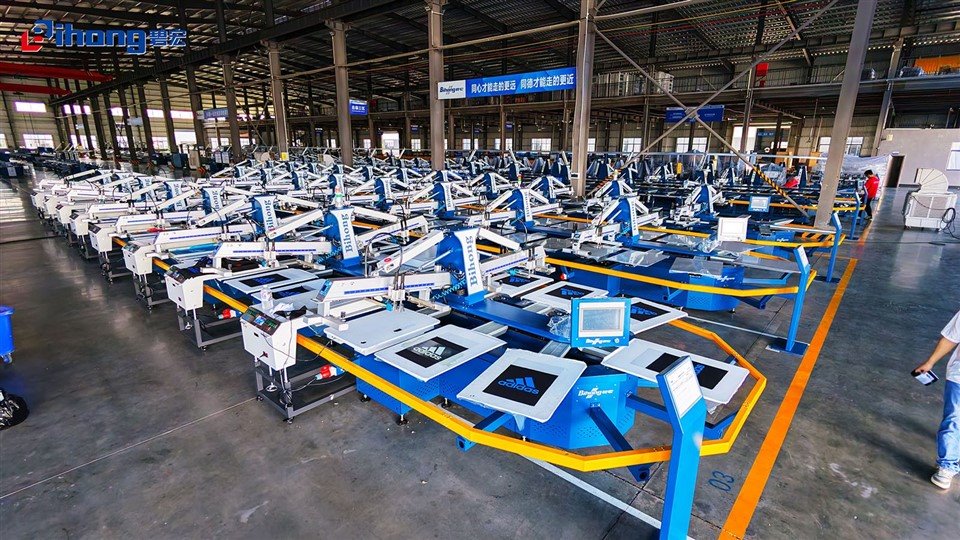
Guangdong Aces Machinery Co., Ltd. is one of the leading manufacturers and suppliers of 22 colors automatic oval screen printing press in China. With abundant experience, we warmly welcome you to wholesale the newest 22 colors automatic oval screen printing press from our factory. All customized machines are with high quality and low price. Welcome to contact us for quotation.
22 Colors Automatic Oval Screen Printing Press Usage
Various processes:
glue paste, water-based ink, plastisol ink, flocking, foaming and other printing processes.
Various fabrics:
cotton, linen, silk, wool, leather, chemical fiber, blended, etc.
Various sizes:
ready-to wear, cut pieces.
Client in cooperation and witness

Detailed Operation Procedures
1. Fabric Pre-treatment
All cotton fabrics must go through pre-shrinking process to release internal fiber shrinkage stress. This prevents pattern distortion, misregistration and size change after printing.
Visual fabric inspection: Reject fabric with oil stains, holes, yarn knots, discoloration or heavy nep defects. Only light base color is accepted for this printing process.
Surface dedusting: Remove loose cotton lint and surface dust by brushing or air blowing. Lint on fabric surface is a major cause of screen clogging and white spot defects.
Check fabric moisture content: Keep fabric at normal workshop humidity (55~65%RH). Over-dry fabric will absorb paste too fast and cause incomplete penetration. Excessively damp fabric may induce pattern bleeding.
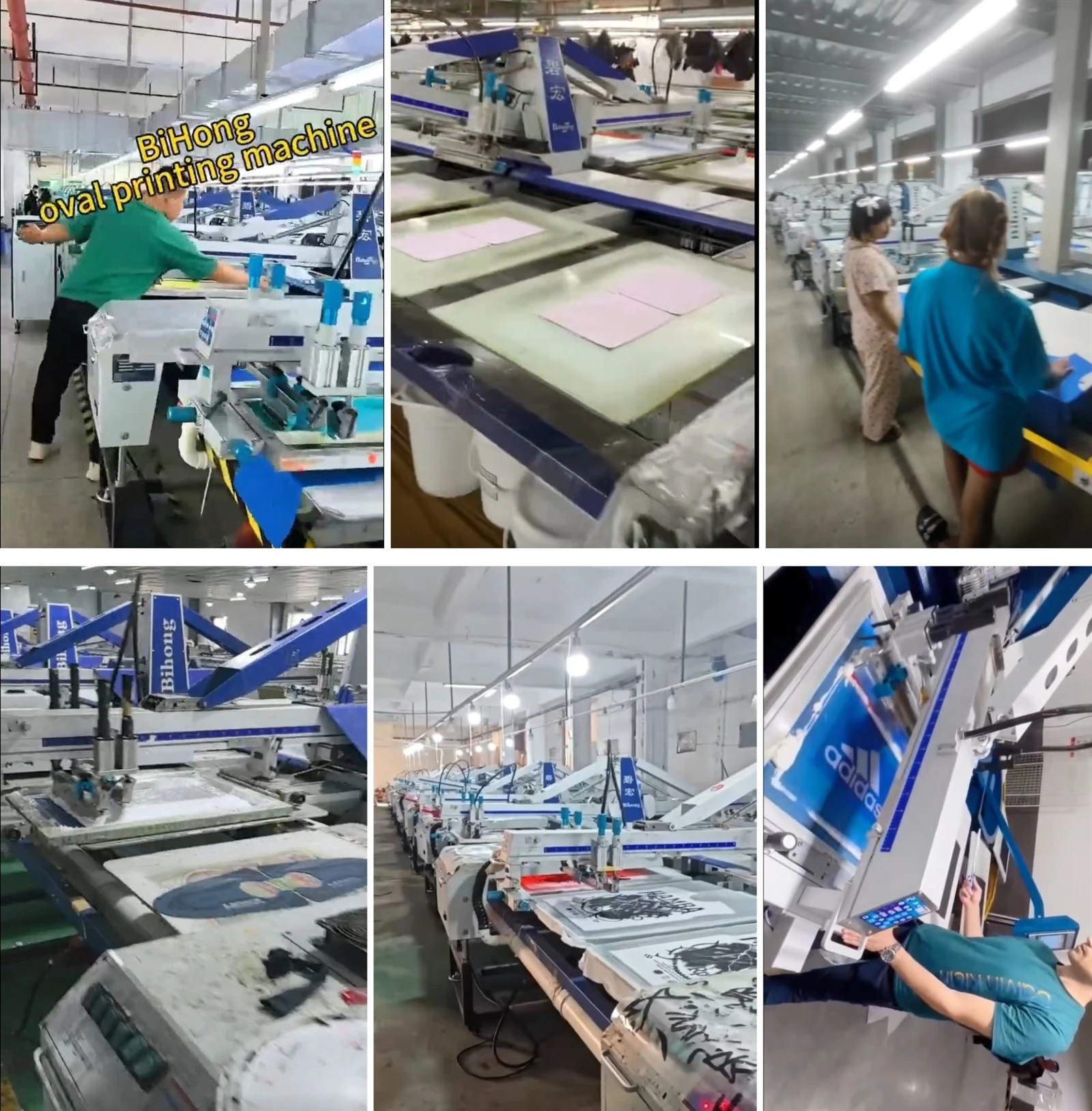
Mesh selection: Large solid block pattern: 80T mesh; normal pattern:100T mesh; fine text, thin lines:120T polyester mesh.
Screen stencil inspection: Check photo emulsion layer integrity. Repair pinholes, cracks or broken emulsion with screen filler. No leakage on non-printing area.
Mount screen onto oval machine print station. Align screen registration marks, adjust horizontal balance of screen frame.
Adjust off-contact gap: The gap between screen and fabric. For thin cotton knit fabric: 1.5 ~ 3 mm. Ensure mesh separates cleanly from fabric after squeegee stroke, avoid trailing paste and smudge.
Pre-wash new screen and dry fully before production to remove residual emulsion residue.
Water-based Pigment Paste Mixing
Add base binder paste into mixing tank first. Slowly add color concentrate while low-speed continuous stirring.
Add small dosage of anti-clog agent and humectant as required. Do NOT over-dilute with pure water. Over dilution leads to pattern bleeding and blurry edges.
- Stirring duration: 8 ~12 minutes at low speed, to achieve homogeneous dispersion of colorant.
- Viscosity test: Target viscosity range: 3000 ~ 6000 cps. Large solid patterns use lower viscosity; fine line patterns use higher viscosity.
- Filtration: Filter mixed paste through 100 mesh filter sieve to remove solid particles.
- Sampling & labeling: Keep paste sample, mark order number, color code, mixing time and operator name.
During production, keep paste tank gentle stirring continuously to prevent pigment settlement.
Reactive Printing Paste Mixing
Reactive printing paste must be prepared on demand, use within valid pot life. Reactive paste will hydrolyze and lose dye reactivity after long storage.
Formula: Reactive dyestuff + printing thickener stock + alkali agent + resist salt + wetting agent.
Low speed stirring until fully dissolved, filter through 100 mesh sieve.
Check paste viscosity immediately after mixing.
Discard leftover reactive paste once pot life expires. Do not reuse expired reactive paste.
Warning: Alkali agent addition timing is critical. Improper alkali dosage will lead to poor fixation or premature dye reaction.
- Squeegee pressure: Set moderate pressure to force paste penetrate into cotton fiber. Too high pressure will cause strike-through and fabric stretching. Too low pressure results in incomplete coverage and missing print.
- Squeegee speed: 250 ~ 400 mm per second. Reduce speed for heavy solid area; increase speed for fine details.
- Squeegee pass: 1~2 passes for large solid areas; single pass for fine patterns. Multiple over-passes will build excess paste and create stiff hand feel.
Tunnel dryer temperature setting:
- Water-based pigment print: 80 ~110°C
- Reactive print pre-drying: 70 ~90°C (low temperature pre-drying, avoid premature dye fixation and color speckle)
- Workshop ambient condition control: Temperature 22\28°C, Humidity 55\65%RH. Low humidity will accelerate paste drying on mesh and cause screen blockage.
Print the first sample piece after machine & paste setup.
QC inspection items on first article: color matching against approved standard swatch, pattern registration accuracy, penetration status, edge sharpness, no bleeding, hand feel & air permeability.
Confirm printing area is soft without plastic film texture, no white spots, no paste trailing.
Fill in First Article Inspection Record. QC and production operator sign off once approved. If sample fails, re-adjust paste formula or machine parameters and re-sample.
Fabric loader lays fabric flat on pallet, align positioning marks precisely, ensure no wrinkles on fabric surface.
Machine operator continuously monitor screen surface during running. Once screen clogging appears, stop machine immediately, clean screen with clean water.
Patrol inspection every 30 minutes: check color consistency, pattern sharpness, paste penetration, fabric flatness.
Stir paste in the bucket intermittently to avoid color sediment.
Keep pallet surface clean. Remove residual paste or lint from pallet to prevent fabric indentation defects.
Record machine parameters, paste batch number and production time in production log sheet.
Water-based Pigment Print Post-treatment
Only tunnel drying required after printing. Dry at 80~110°C until full moisture evaporation. No steaming, washing or soaping needed. Ensure complete drying; insufficient drying will cause rubbing off.
Reactive Printing Post-treatment (Core Process)
- Pre-drying: 70 ~90°C, dry printed fabric thoroughly without scorching.
- Steaming: 102 \105°C saturated steam, holding time 8\15 min. This step enables chemical reaction between reactive dye and cotton cellulose for permanent color fixation. Steaming chamber must maintain saturated humidity.
- Washing & soaping sequence: Cold rinse → Hot soaping bath with soaping agent → Multiple clean water rinsing. Purpose: fully remove unfixed loose dye and printing thickener. Incomplete washing will lead to poor washing fastness.
- Final drying: Dry fabric below 100°C. Avoid high temperature over-baking.
Inspection checklist:
- Visual appearance: Uniform color, no color deviation, missing print, paste trailing, white spots, blurry edges, pinholes.
- Hand feel & breathability: Printed area soft, no hard crust, maintain cotton fabric air permeability.
- Color fastness sampling test: Washing fastness and dry/wet rubbing fastness shall be tested according to order standard. Reactive print achieves better color fastness than regular water-based pigment print.
Quality Acceptance Standard
- Hand feel requirement: Printed zone soft, no hard film, air permeability retained.
- Pattern quality: Clear outline, no bleeding or halo effect on pattern edges.
- Defect rate: Control batch reject rate as per customer order specification.
- Application limitation: Low hiding power. Not suitable for dark base fabrics. Dark substrate printing should adopt plastisol process.
Common Defects, Root Causes & Corrective Actions
|
Defect |
Root Cause |
Corrective Action |
|
Stiff hand feel on printed area |
Excessive paste deposit, over high drying temperature, wrong paste formulation |
Reduce paste loading volume, lower tunnel temperature, re-formulate printing paste |
|
Pattern bleeding / halo edge |
Paste viscosity too low, squeegee pressure too heavy |
Increase paste viscosity, reduce squeegee pressure |
|
Screen clogging & broken print |
Solid particles in paste, cotton lint, paste dried on mesh |
Filter paste before use, perform regular screen cleaning, add anti-clog agent |
|
Reactive print color bleeding after washing |
Insufficient steaming time, incomplete soaping & rinsing |
Extend steaming holding time, strengthen washing and soaping process |
|
Batch color variation |
Uneven paste stirring, pigment settlement, inconsistent drying temperature |
Keep paste continuous stirring, prepare paste in batches, stabilize dryer temperature |
|
Pattern misregistration |
Fabric wrinkling, loose screen frame, unstable pallet position |
Improve fabric flat laying, re-tension screen mesh, re-calibrate machine registration |
Safety & Housekeeping Requirements
Water-based printing paste is low-VOC aqueous chemical. Maintain good ventilation in printing workshop.
After production shutdown, clean squeegee and screen mesh with clean water immediately. Never allow paste to dry and solidify on mesh.
Waste paste and wastewater shall be handled following factory environmental protection regulations. Do not discharge waste paste directly.
Operators shall wear protective gloves during paste mixing and printing operation, avoid long-time direct skin contact with printing chemicals.
Keep work station clean. No accumulated fabric scraps, spilled paste on the floor.
Required Documentation & Records
Printing Paste Mixing Record
First Article Inspection (FAI) Form
Production Patrol Inspection Log
Finished Goods Quality Inspection Report
Raw Material Batch Receipt Record
Machine Parameter Setting Log
Hot Tags: 22 colors automatic oval screen printing press, China 22 colors automatic oval screen printing press manufacturers, suppliers, factory


