



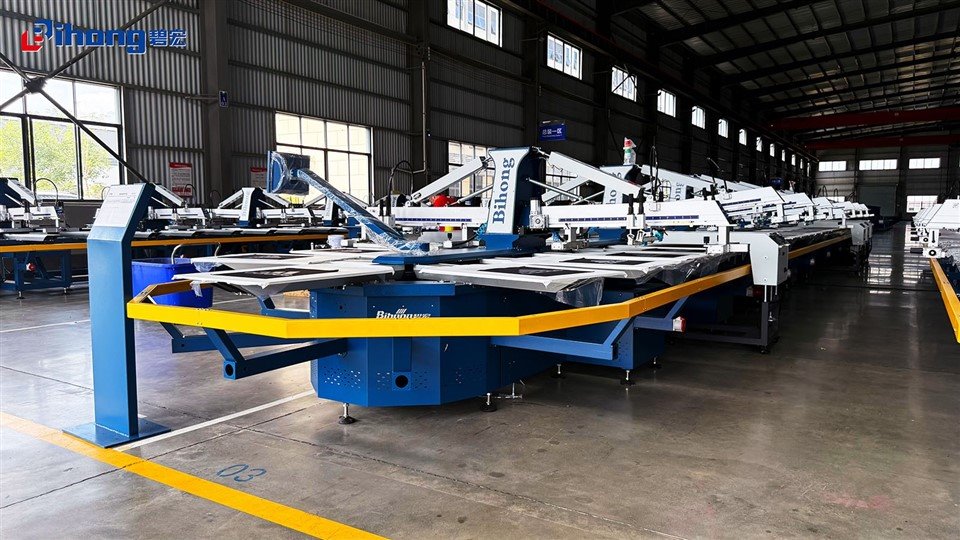
Guangdong Aces Machinery Co., Ltd. is one of the leading manufacturers and suppliers of 8 colors automatic oval screen printing press in China. With abundant experience, we warmly welcome you to wholesale the newest 8 colors automatic oval screen printing press from our factory. All customized machines are with high quality and low price. Welcome to contact us for quotation.
8 Colors Automatic Oval Screen Printing Press --- Key Features
1. Fully digital high-precision motor adjustment and memory positioning function to achieve fast alignment.
2. The print heads are driven by an intelligent full-servo system equipped with reducers. They operate with high precision, delivering a more stable printing process and lower noise levels.
3. Print heads adopt double pneumatic automatic lifting screen, making the air pressure more stable, instead of manually lifting the screen, so that the operator saves time and effort.
4. All electric screen printer can be quickly unloaded and installed, overcoming the difficulty of unloading and not limited by the screen frame: the size of the screen frame can be used universally.
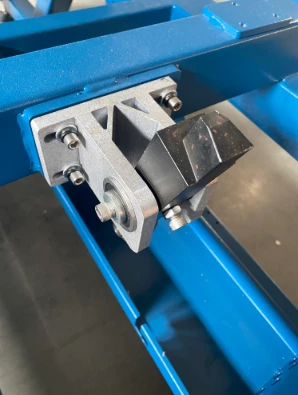
5. Pallets adopt 8mm solid platen combined with the unique support method independently developed by our company, so that the pallet will never be deformed.
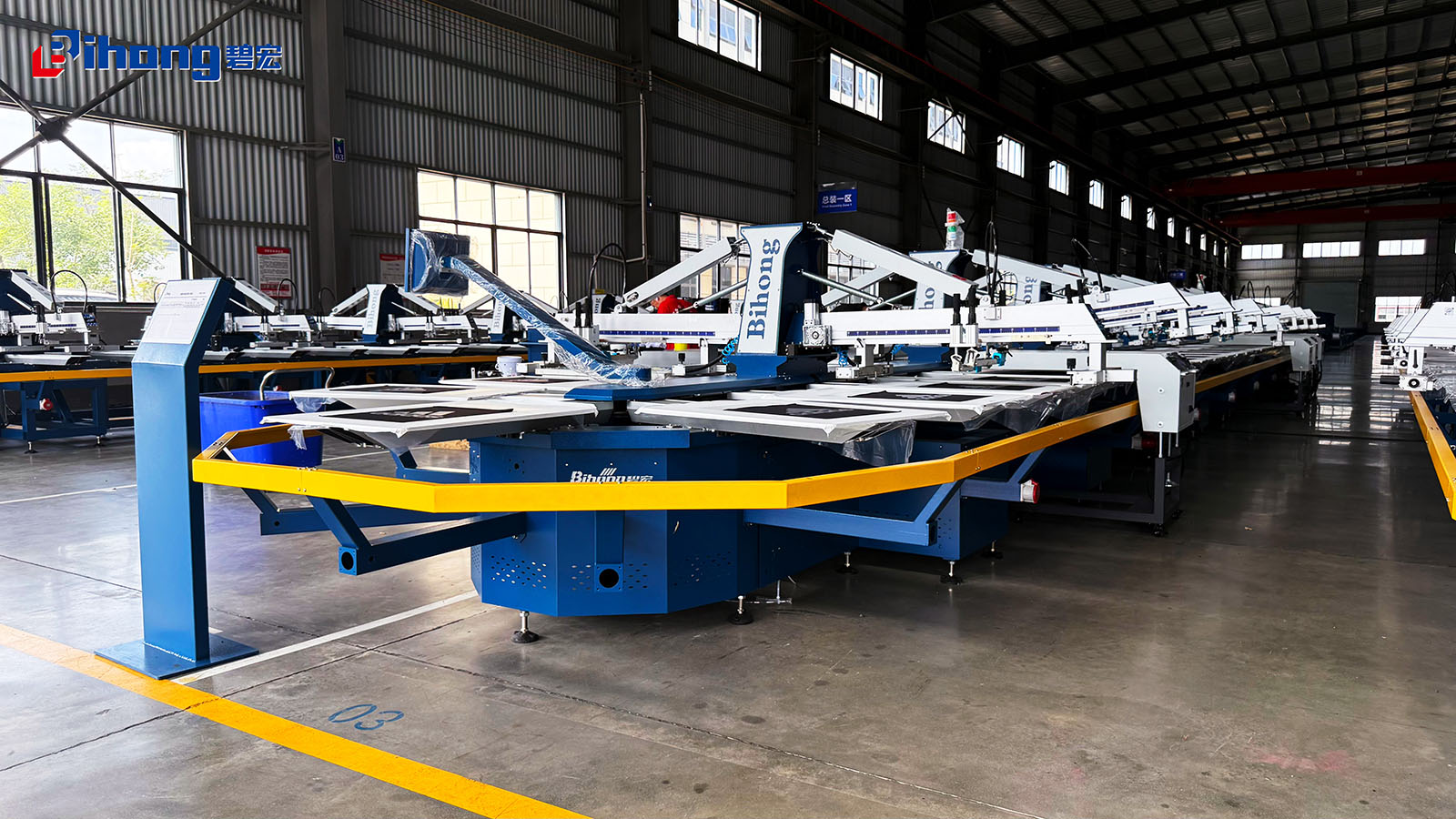
6. Fully electric screen press Parallel moving oven makes the overall appearance of the machine look good, and it is convenient for operators to clean.
7. High nesting accuracy: advanced Servo driven screen printer technology, mature and stable. Machine nesting accuracy error is within ±0.01 mm, effectively improving the quality rate of printed products and the printing quality.
8. Suitable for multiple printing processes; using the arrangement of print head, oven and cooling, various pastes can be used, especially for different printing processes such as water-based ink, plastisol ink, thick plate, discharge, puff, etc.
9. 8 colors Automatic Oval Screen Printing Press have 30pcs platens , for the basic style, one hour production volume is 600-750pcs , need 4-5 workers to take care, 1 feeding, 1 collecting, 1 machine operator , 1 do cleaning and general work, 1 flexible work.
Pigment printing Common Defects and Countermeasures
|
Defect |
Symptom |
Main Cause |
Countermeasure |
|
See-through (see-through) |
Paste fails to cover dark substrate |
Insufficient paste, low mesh count, inadequate underbase |
Increase underbase, add paste, increase squeegee pressure |
|
Bleeding / feathering |
Color spreads beyond edge |
Paste too thin, low tension, excessive pressure, off-contact too small |
Thicken, raise tension, reduce pressure, adjust off-contact |
|
Mesh clogging |
Pattern interrupted / incomplete |
Paste dries, high viscosity, excess additive, poor cleaning |
Clean screen promptly, adjust viscosity, control curing-agent ratio |
|
Bubbling / pinholes |
Bubbles or pinholes on film surface |
Air entrained in mixing, insufficient defoamer |
Deaerate thoroughly, add defoamer, lower viscosity |
|
Cracking |
Film cracks after drying |
Insufficient cure, film too thick, insufficient plasticizer |
Raise curing temperature/time, reduce thickness, add softener |
|
Poor adhesion / color loss |
Paste or color washes off |
Under-cured, untreated fabric, mismatched paste |
Cure to spec, pre-treat to degrease, select compatible paste |
|
Color bleeding / cross-contamination |
Adjacent colors intermix |
Insufficient intermediate drying, small station spacing |
Increase intermediate drying, adjust print order |
|
Too stiff hand feel |
Printed area stiff |
Thick film, over-cured, insufficient softener |
Reduce paste, add softener, control curing |
|
Mesh marks |
Visible mesh texture on surface |
Paste too thick, coarse mesh, poor leveling |
Add flow aid, lower viscosity, use finer mesh |
|
Sticking / adhesion |
Layers stick after stacking |
Insufficient surface dry, inadequate cooling |
Extend drying, strengthen cooling |
SOP Standard Operating Procedure (Pigment Printing)
1.Document Information
|
Item |
Content |
|
SOP No. |
SOP-PRINT-JJ-001 |
|
Version |
V1.0 |
|
Scope |
Pigment printing on oval / elliptical screen printing machine |
|
Basis |
Sections 2–6 of this document (process and parameters) |
|
Applicable roles |
Print machine operator, process engineer, QC inspector |
2.Pre-operation Preparation (Before Startup)
|
Step |
Action |
Standard / Key Point |
Record |
|
1 Machine check |
Inspect mechanisms, air pressure, temperature control, squeegee, frames |
All normal, no leaks, temperature control effective |
Check sheet |
|
2 Paste preparation |
Weigh paste/color/auxiliaries per recipe, mix and deaerate |
Accurate ratio, suitable viscosity, no lumps/bubbles |
Mixing record |
|
3 Screen check |
Verify mesh count, tension, pattern; no clogging or pinholes |
Screen clean and sound, tension qualified |
Screen check |
|
4 Registration trial |
Mount screens, register, set squeegee parameters, trial print |
Accurate registration, first piece qualified |
First-piece approval |
|
5 Environment |
Confirm workshop temperature, humidity, ventilation |
Suitable temperature, good ventilation |
- |
3.Operation Steps (Production Printing)
|
Step |
Action |
Key Control Point |
|
1 Load fabric |
Feed flat, adjust tension, dust removal |
No skew, no wrinkles, no soiling |
|
2 Underbase (dark fabric) |
Print white paste per underbase process, intermediate dry |
Even underbase, adequate coverage |
|
3 Main print |
Print each color in registration order, intermediate dry per color |
Accurate registration, even paste, no see-through/bleed |
|
4 Registration check |
Check registration station by station for multi-color pattern |
No misalignment, no cross-contamination |
|
5 Final curing |
Cure through tunnel dryer |
Temperature and time meet requirements; film cross-links |
|
6 Cooling & collection |
Collect after cooling to prevent adhesion |
Fully cooled, interleave stacking |
|
7 Self-inspection |
Check per first/middle/final inspection |
Color, registration, fastness, appearance qualified |
4.In-process Inspection (First / Middle / Final)
|
Check Point |
Frequency |
Standard / Method |
|
First-piece approval |
Each batch first piece |
Color, registration, see-through, bleed, adhesion pass before batch production |
|
Color check |
Each batch / periodic |
Visual comparison with standard color card; colorimetry if needed |
|
Registration check |
Continuous |
No misalignment in multi-color registration |
|
Appearance check |
Each roll / periodic |
No see-through, bleeding, clogging, bubbling, mesh marks |
|
Fastness sampling |
Each batch |
Wash and rub fastness sampling meets standard |
|
Final-piece check |
End of each batch |
Consistent with first piece; no batch deviation |
5. Safety and Environmental Requirements
Operators must wear protective gloves and goggles. Maintain good ventilation in the workshop to prevent accumulation of solvent vapors from paste. Store and use pastes and auxiliaries per MSDS; keep away from ignition sources. Discarded paste and cleaning liquids must be collected and disposed of separately in compliance with environmental requirements - never poured away at will. Keep hands out of the printing area while the machine runs; shut off air and power and post a lockout/tagout sign before maintenance.
6. Records and Forms
The production floor should maintain: equipment check sheet, paste mixing record, first-piece approval record, in-process inspection record (first/middle/final), fastness test record, and quality deviation & corrective record. All records shall be archived per requirements as the basis for quality traceability.
Appendix: Applicability of Parameters
All parameters in this document are industry-recommended typical values. Before mass production, the final parameters must be confirmed by trial printing on the actual machine, fabric and paste, and recorded in the workshop process card. For specific pastes, auxiliaries and curing conditions, refer to the paste manufacturer's technical data sheet (TDS).
Constructed from heavy-duty sheet metal alloy, the machine remains fully operational even after 10 years of service. It features a low depreciation rate and retains strong long-term value. Investing in Bihong printers is a prudent and stable choice.
|
Specifications |
BH-U8-8C |
BH-U8-10C |
BH-U8-12C |
BH-U8-14C |
BH-U8-16C |
BH-U8-18C |
BH-U8-20C |
|
Color |
8colors |
10colors |
12colors |
14colors |
16colors |
18colors |
20colors |
|
Number of Pallets |
30pcs |
36pcs |
42pcs |
48pcs |
54pcs |
60pcs |
66pcs |
|
Pallet Size(WxL) |
S 630x865mm L1 700x1050mm L2 850x1200mm |
||||||
|
Printing Image Area(WxL) |
S 580x700mm L1 650x900mm L2 800x1000mm |
||||||
|
Screen Frame Size (WxL) |
S 700x1000mm L1 800x1180mm L2 900x1280mm |
||||||
|
Machine Length |
1400cm |
1650cm |
1900cm |
2145cm |
2392cm |
2640cm |
2890cm |
|
Machine Width |
S 350cm L1 380cm L2 420cm |
||||||
|
Machine Height |
S 160cm L1 180cm L2 186cm |
||||||
|
Machine Weight |
3600kg |
4390kg |
5150kg |
5900kg |
6660kg |
7450kg |
8200kg |
|
Printing Registration Accuracy |
±0.01mm |
||||||
|
Pneumatic Requirement |
0.6MPa/0.8MPa (After drying and filtering can be used) |
||||||
|
Print Head Power Driver |
400W (every printing head serovo motor) |
||||||
|
Total Power Consumption(No Flash Cure) |
4.7kw |
6kw |
6.8kw |
7.6kw |
8.9kw |
9.7kw |
10.5kw |
|
Each Oven Max.Power |
S 15.6kw L1 19.5kw L2 32.5kw |
||||||
|
Electric Requirement |
Three phase 380V, 50Hz |
||||||
|
Production Capacity |
600pcs/hour |
||||||
Hot Tags: 8 colors automatic oval screen printing press, China 8 colors automatic oval screen printing press manufacturers, suppliers, factory


