



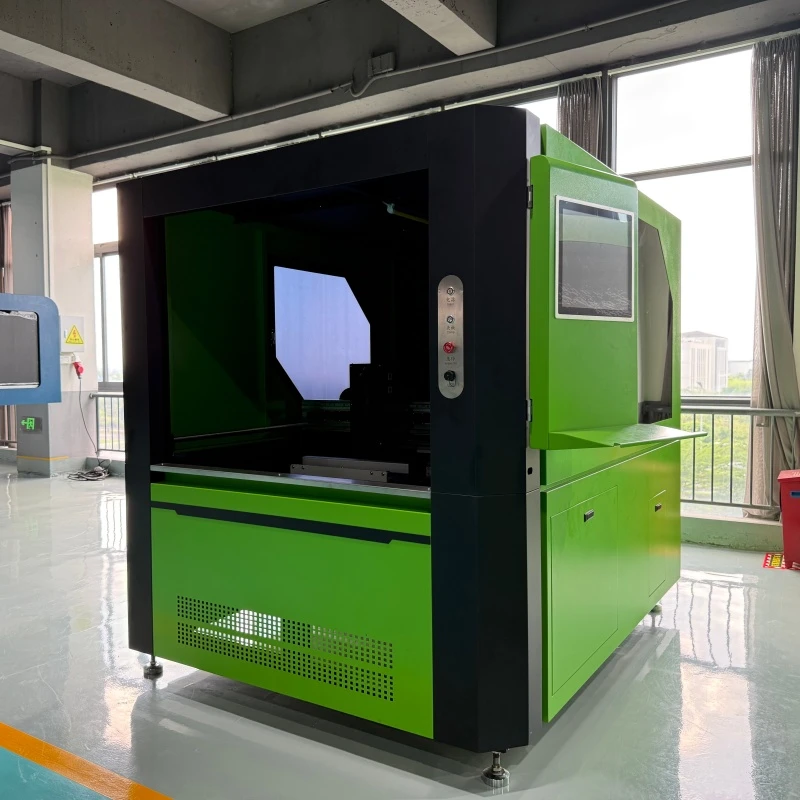
Guangdong Aces Machinery Co., Ltd. is one of the leading manufacturers and suppliers of screen making machine basic in China. With abundant experience, we warmly welcome you to wholesale the newest screen making machine basic from our factory. All customized machines are with high quality and low price. Welcome to contact us for quotation.
Screen Making Machine Basic Features
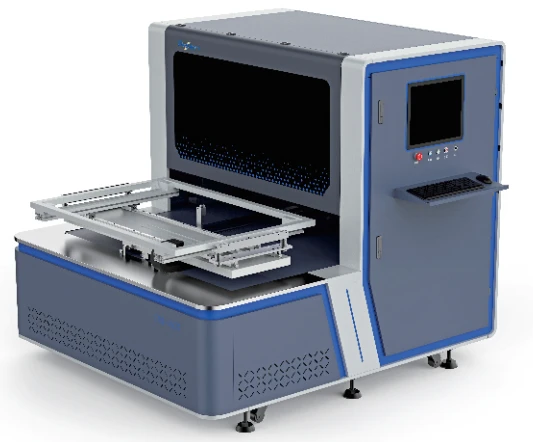
Computer direct make screen is a digital imaging process on screen frame.The film free laser screen making machine transforms the edited text and images into digital dot-matrix image data through RIP engine, and then the computer of the machine controls the high-precision optical system to directly expose the imaging of the screen frame. Film free laser direct imaging instead of traditional film craftsmanship, Direct to Screen DTS not only solves the quality problems caused by film wear and shrinkage,Screen exposure system but also saves the cost from more than100,000 to hundreds of thousands of yuan per year for enterprises.
During the quick change of screen frames, Pre press screen maker the image output is controlled by the computer to ensure that the repeated error of each exposure is within 0.02mm. Screen Making Machine Basic Laser to Screen LTS The self-developed screen frame positioning system, Digital screen imaging which adapts to a variety of fixing devices such as registration pins, thimbles, T shape steel and so on, Computer to Screen CTS is able to change the screen faster, more accurate, and easier. Self-developed thick film printing laser module with strong exposure energy, effectively penetrates screen emulsion with 300 micron net thickness and solves the problem of 3D pattern(thick film)printing.
|
Specifications |
Value |
|
Model |
BH-CTS3000C |
|
Size |
2020x1800x1760mm |
|
Weight |
1700kg |
|
Rated Voltage |
220V 50Hz |
|
Max. Power |
4KW |
|
Rated Compression Air Pressure |
0.6Mpa-0.8Mpa |
|
Max. Exposure Area of the Screen |
1280x1000mm |
|
Max. Size of the Screen |
1280x1000mm |
|
Min. Exposure Area of the Screen |
400x400mm |
|
Focus Mode |
dynamic focus |
|
Laser Output Wavelength |
405 |
|
Output Laser Power |
20w |
|
Laser Output Mode |
Optical Fiber |
|
Photosensitive Material |
SBQ photosensitive adhesive |
|
Acceptable Photographic Adhesive Thickness |
6-300um |
|
Input File Format |
Tiff/Gerber 274D/X |
|
Image Resolution |
10500dpi |
|
Exposure Capacity |
1m2 1-3min (depend on the characteristics of photosensitive adhesive) |
|
Min. Optical Output Line Width |
40μm |
|
Screen Thickness |
25-40mm |
CTS Laser Screen Plate-making Machine - Process Guide
Operating Principle
The CTS (Computer To Screen) laser screen plate-making machine works without any film positive. The computer imports the print image file directly; after color separation and processing by RIP software, a 405nm violet laser (driven by a DMD digital micromirror imaging module) projects the image beam directly onto a pre-coated and dried screen mesh, completing digital exposure.
- Laser-exposed areas: The photo-emulsion undergoes a photochemical reaction and cross-links/cures; after development it remains on the mesh, forming the non-ink-permeable masked (stencil) areas.
- Non-exposed areas: The photo-emulsion stays soluble; water rinsing (development) washes it away, opening up the ink-permeable image stencils.
The whole process is non-contact digital exposure, eliminating the traditional steps of film output, film registration and vacuum frame exposure.
- Core hardware: 405nm violet laser source, DMD digital micromirror chip, high-precision linear-motor motion platform, water-cooled constant-temperature system, and RIP image-processing software.
Products Advantages
- No film positives - lower cost: Saves film consumables and film-output labor; eliminates pattern distortion and dot gain caused by film heat expansion/contraction, scratches and aging. Long-term plate-making cost is lower.
- High precision and fine patterns: Resolution of 1270–2540 dpi, supporting up to 133 LPI halftone screening. Micro-text, fine lines and gradient dots are reproduced sharply; repeat registration accuracy reaches 0.02 mm, ideal for fine patterns and precision circuit printing.
- Fast plate-making: A 1 m × 1 m screen exposes in about 3 minutes; files go directly to the machine, and design changes need no new film. Turnaround for small orders and sampling is greatly shortened.
- Strong process compatibility: Uses conventional screen photo-emulsion directly; existing development, rinsing and stencil-reinforcement steps remain fully compatible with traditional screen-printing workflows, so factories need no major line retrofit.
- Higher yield: Non-contact exposure does not scratch the mesh; no dust or bubble pin-holes from film, giving more consistent screens - stable color and pattern across multiple screens, suited to multi-color registration.
- Eco-friendly and energy-saving: Less film/effluent waste; solid-state laser sources have low power consumption and long service life.
Application Range
- Textile printing: Garment screen printing, home textiles, canvas and bag printing; street-style and embroidery-matched screen-printing stencils (applies to the embroidery + color-printing combination described earlier).
- Packaging & label printing: Cosmetic boxes, paper packaging, self-adhesive labels, and hot-stamping stencils.
- Electronics: PCB circuits, membrane switches, thick-film circuits, and solar paste printing.
- Other fields: Ceramic substrates, automotive glass, decorative panels, acrylic, and advertising sign printing.
Suitable Process Workflow (Full CTS Plate-making Flow)
- Stretching and coating: Stretch screen mesh on an aluminum frame; coat photo-emulsion evenly.
- Low-temperature drying: Dry the screen at constant temperature, controlling humidity to ensure uniform emulsion drying.
- File import & laser exposure: RIP processes the TIFF/1-bit image; the CTS machine exposes the image directly onto the screen's photo-emulsion by laser.
- Development & rinsing: High-pressure water spray washes away unexposed soluble emulsion, opening the ink-permeable image stencils.
- Drying & inspection: Dry the screen a second time; check for broken lines, pin-holes and dot defects.
- Touch-up & stencil reinforcement: Repair defects and reinforce non-image areas to strengthen the stencil.
- Finished screen: Deliver the completed screen for screen-printing use.
Comparison with the traditional process - Traditional: design → film output → film registration → vacuum exposure → development. CTS: design → laser exposure → development, directly eliminating the three film-related steps.
Additional Notes
Best suited for: Multi-color registration, fine halftone dots, frequent pattern changes, heavy sampling, and small-batch / fast-turnaround orders.
Shortcoming: Higher initial equipment investment; for simple coarse-line, low-mesh screens the cost advantage is not obvious.
Hot Tags: screen making machine basic, China screen making machine basic manufacturers, suppliers, factory


