



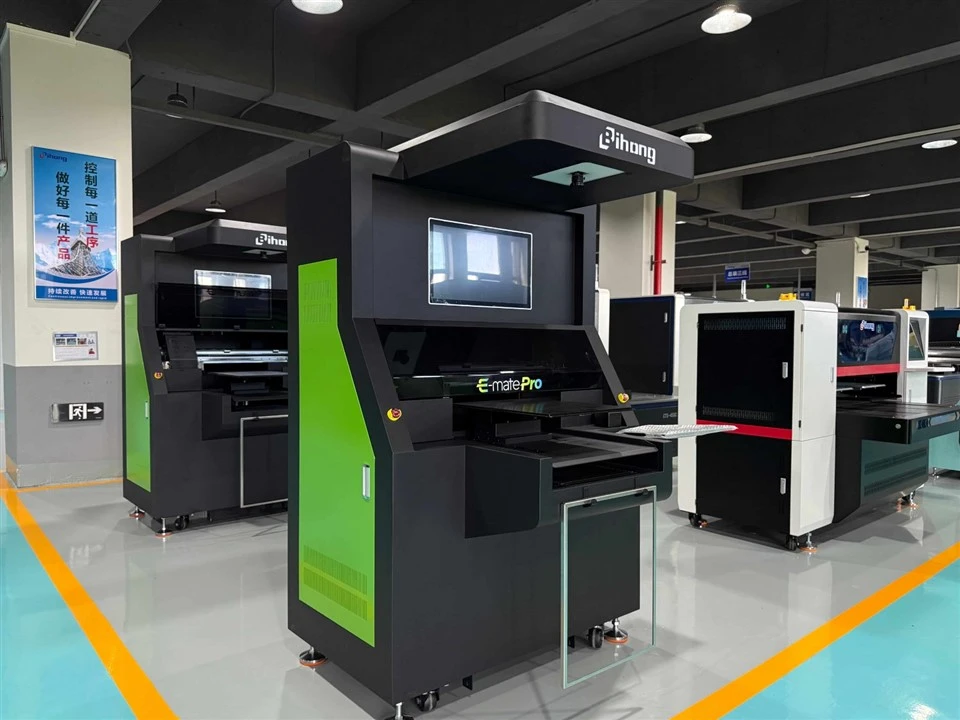
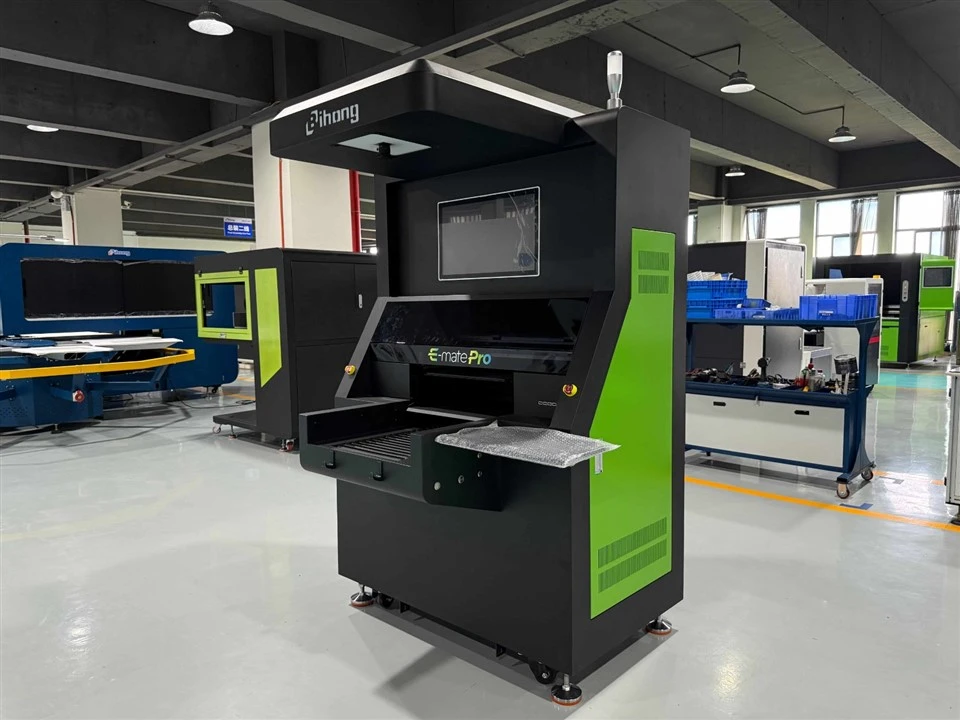
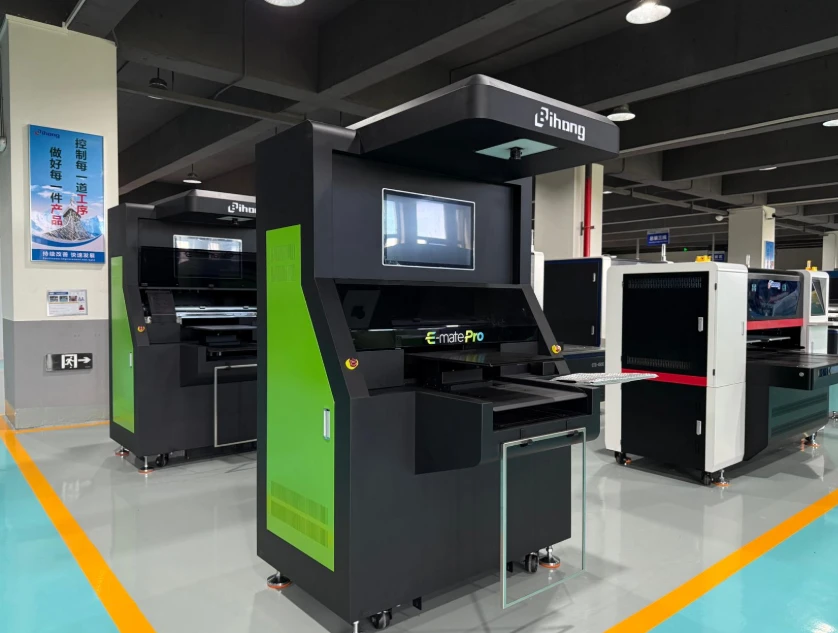
Guangdong Aces Machinery Co., Ltd. is one of the leading manufacturers and suppliers of embroidery digital printer basic in China. With abundant experience, we warmly welcome you to wholesale the newest embroidery digital printer basic from our factory. All customized machines are with high quality and low price. Welcome to contact us for quotation.
E-Mate DTE
Embroidery Patch Digital Direct Printer
Embroidery Digital Printer Basic Process Flow
Camera positioning → Embroidery patch → Digital printing → Curing → Finished product
Embroidery Digital Printer Basic Key Features
- Soft hand feel with outstanding wash fastness
- High resolution and vivid color reproduction
- Simplified workflow, easy operation, eco-friendly & low carbon
- direct to embroidery printing Reduced production cost and fast ROI (return on investment)
- The colors of digital direct printing do not merely adhere to the material surface; they penetrate deep into the fiber structure and form stable bonds with the substrate. The colors remain bright after washing, resisting fading and bleeding.
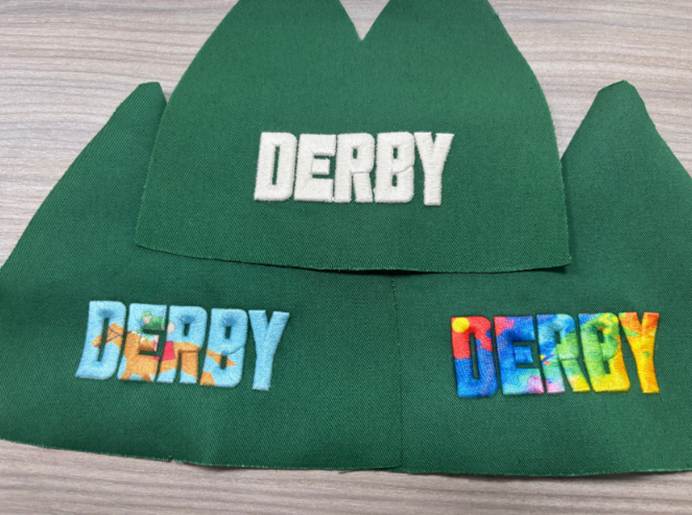
- Gradient color application: Rainbow and fluorescent color transitions for texts and logos deliver striking visual impact.
- Embroidery visual variation: The same pattern can be rendered in multiple visual styles via digital technology.
- digital embroidery printing Process evolution showcase: The complete transformation from white-base embroidery to full-color finished products.
|
Item |
Specification |
|
Product Model |
E-Mate DTE |
|
Print Head |
Epson ×2 |
|
Ink Type |
Disperse dye, Pigment, Fluorescent disperse |
|
Printing Size |
14 ×16" / 370×420mm |
|
Curing System |
Oven Cure |
|
Printing Speed |
370×420mm / 40 second |
|
RIP Software |
RIIN |
|
Packaging Dimensions |
1300×1260×1500mm |
|
Electrical Parameters |
AC220V, 50/60HZ |
|
Image Formats |
JPG / TIFF / PNG |
- The CCD precision registration & auto visual positioning system guarantees accurate printing over embroidered patches, cutting manual alignment errors and lifting consistency and yield.
- inkjet embroidery It creates seamless gradients and multi-tonal transitions unachievable with ordinary threads. Vivid, saturated colors strengthen brand visual identity.
- High design flexibility embroidery printing supports intricate pattern output. Free from thread color limitations, designers can realize full creative concepts for high-end custom brand orders.
- Cost-effective & high-speed manufacturing digital printing directly to white embroidery Faster production and sampling reduce entry barriers, enabling small & mid-sized embroidery workshops to accept complex orders and grow creativity alongside profits.
Digital Color Printing on White Embroidery - Process Guide
Process Introduction
This process means completing white embroidery on the fabric first, and then performing digital color printing on the finished embroidered surface (printing after embroidery, not embroidering after printing).
There are two mainstream technical routes:
- DTG pigment direct-to-garment printing - for finished garments or cut pieces
- UV digital color printing - for rigid substrates and thick embroidery
Sublimation printing is rarely adopted due to its limitations on white embroidery.
Overall Process
- Substrate preparation: Carry out white embroidery on the base fabric to form patterns, logos or outlines with white polyester/rayon embroidery thread. Clean loose fibers and thread ends on the embroidered surface.
- Pre-treatment (mandatory for DTG, not required for UV): Spray special pre-treatment liquid for pigment ink evenly on the embroidered area and dry it. It improves ink adhesion and prevents ink bleeding or spreading on the uneven embroidered surface.
The embroidered surface is uneven compared with flat fabric. The pre-treatment coating thickness must be well controlled. Over-coating causes blurring while insufficient coating leads to poor color fastness.
- Digital color printing: Use RIP software for color separation and color calibration. The digital print head directly sprays color ink onto the raised white embroidery threads and base fabric, covering the white embroidery with colorful patterns.
- DTG: Adopt water-based pigment ink. After printing, the workpiece goes through a tunnel oven for high-temperature drying and color fixation.
- UV color printing: Adopt UV pigment ink. The UV lamp cures the ink instantly after inkjet printing, requiring no drying oven.
- Finishing: Cool down and inspect the products. A transparent protective varnish can be applied for higher color fastness (commonly used in UV process).
Process feature: Color patterns are superimposed on the 3D white embroidery. The white embroidery serves as a three-dimensional base layer, and color printing endows embroidery with rich color gradients and photographic patterns.
Important reminder: There are concave and convex gaps on embroidery. Ink only adheres to the surface of embroidery threads and can hardly penetrate inside. The color ink layer on heavily rubbed areas will wear off preferentially.
Ink Selection
1. DTG Water-based Pigment Ink (Most Widely Used)
Compatible with cotton, cotton-polyester blend and polyester embroidered fabrics. Soft hand feel. Since white embroidery itself is a light-colored substrate, white ink is not required and color ink can be printed directly. Pre-treatment and drying are necessary.
2. UV Pigment Ink
No pre-treatment needed; instant curing by UV light. Suitable for heavy embroidery and relatively rigid fabrics. Disadvantage: The ink forms a film on embroidery threads, resulting in stiff hand feel and possible cracking after repeated bending.
Not recommended: Sublimation disperse ink. Sublimation requires high temperature around 200°C, which may shrink and deform white polyester embroidery threads and collapse embroidered textures.
Application Scenarios
- Apparel: Fashion brand hoodies, fashion cut pieces, denim garments. White embroidered outlines overlaid with colorful patterns combine 3D embroidery and rich colors for high-end fashion decorations; also for chest logos and large back patterns.
- Bags, shoes & hats: Canvas bags, baseball caps and work backpacks. Colorful illustrations or landscape patterns are printed on the white embroidered base of cap panels.
- Home textiles & gifts: Throw pillows, cushions, decorative paintings and crafts. The 3D white embroidery acts as the base layer, overprinted with landscapes, portraits and gradient patterns for soft furnishing and cultural & creative products.
- Woven labels & patches: Thick woven patches with white embroidery, overprinted with complex color graphics and texts.
Scope of Application
Recommended Base Fabrics & Embroidery Threads
- Base fabric: Cotton, polyester, canvas, cotton-polyester blend, lightweight denim
- Embroidery thread: White polyester embroidery thread, white rayon embroidery thread (most stable)
Not Recommended
- Ultra-thin high-elastic knit fabric: Embroidery is prone to tensile deformation, and cracks may occur after color printing.
- Extra-thick towel embroidery / thick rope embroidery with huge gaps: The height difference is too large, which may scratch the print head and cause missing printing or broken patterns.
- Products subject to repeated heavy friction and long-term outdoor exposure: The wear resistance of the surface color ink layer is weaker than embroidery thread. The color coating will wear away, exposing the underlying white embroidery.
Advantages
Combines three-dimensional texture and rich colors: The underlying white embroidery retains raised 3D texture; digital color printing can realize photographic images and complex color gradients, making up for the weakness that pure embroidery can hardly achieve gradient colors.
No plate making required. Fast sampling and flexible pattern replacement, suitable for small-batch and customized orders.
White embroidery works as the base color, so white ink is unnecessary. Compared with printing on dark fabrics, ink cost is lower and color reproduction is cleaner and brighter.
High added value of combined craftsmanship with low market homogeneity. Ideal for high-end cultural & creative products and fashion brands.
DTG pigment ink solution delivers relatively soft hand feel without fully covering the embroidered texture, and the concave-convex texture of embroidery remains tactile.
Disadvantages (Optional)
On uneven embroidered surface, ink only adheres to the outer layer of embroidery threads. Its friction resistance is worse than native colored embroidery. The color layer will wear after long-time friction and reveal white threads underneath.
Large height difference of embroidery may scratch digital print heads. Embroidery height is generally recommended to be controlled within 1.5 mm.
Two separate working procedures (embroidery first then color printing), slower production speed and higher cost than single printing process.
Summary
Digital direct color printing is performed on pre-finished 3D white embroidered cut pieces or garments. With white embroidery as the three-dimensional base, colorful graphics and images are superimposed, achieving both embroidered texture and photo-level color effects. It is widely applied in fashion apparel, bags, home textiles and customized cultural & creative products.
Hot Tags: embroidery digital printer basic, China embroidery digital printer basic manufacturers, suppliers, factory


